Fish Habitats & Shelters
Why Habitat Matters
In a natural lake, fish have evolved to use complex habitat — submerged logs, rocky outcrops, aquatic vegetation, and fallen brush — for shelter, spawning, feeding, and escape from predators. Man-made ponds and managed lakes often lack this structural complexity, limiting their fish-carrying capacity and biodiversity.
Adding artificial habitat structures can dramatically increase your lake's fish-holding capacity, improve spawning success, and concentrate fish in predictable locations — making for better fishing and a healthier ecosystem.
Types of Fish Habitat
Brush Piles
Submerged brush piles created from tree trimmings or Christmas trees provide excellent cover for Bluegill, Bass, and Crappie. They create spawning zones and ambush points for predators. Placement in 4–12 feet of water near depth transitions is most effective.
Spawning Beds & Gravel Areas
Bass and Bluegill require sandy or gravelly substrate for nest building. In lakes with uniform mud bottoms, adding gravel in 1–4 foot shallows significantly improves spawning success and fry survival rates.
Aquatic Vegetation Zones
Managed areas of native aquatic plants provide critical juvenile fish habitat, reduce bank erosion, and support the invertebrate populations that form the base of the food chain. Cattails, bulrush, and water lilies all play important roles.
Artificial Structure
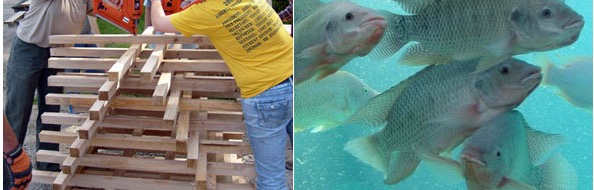
Manufactured fish habitat products (PVC pipe assemblies, plastic trees, spawning mats) provide durable, long-lasting shelter without the decomposition issues of natural materials. These are particularly useful in deeper lakes.
Dock and Bank Structure
Floating docks, pier pilings, and riprap bank reinforcement all create fish habitat. Shade from docks provides thermal refuge in Arizona summers and concentrates baitfish — making docks natural fishing hot spots.
Habitat Enhancement Planning
P.K. Gills can advise on habitat improvements that complement your fish stocking program. The right structure in the right location makes a significant difference in fish survival and growth.
Ask Us About Habitat